-
Table of Contents
Exploring the Effects of Sildenafil Citrate on Sports Performance
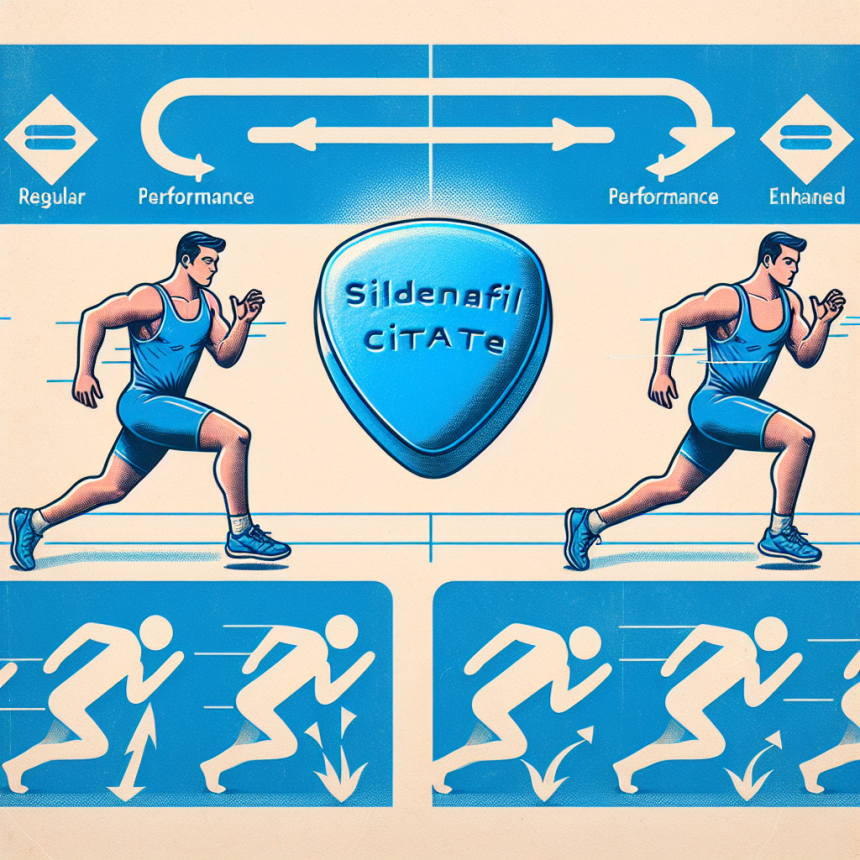
Sildenafil citrate, commonly known as Viagra, is a medication primarily used to treat erectile dysfunction. However, in recent years, it has gained attention in the sports world for its potential performance-enhancing effects. This article will delve into the pharmacokinetics and pharmacodynamics of sildenafil citrate and its impact on sports performance.
The Mechanism of Action of Sildenafil Citrate
Sildenafil citrate works by inhibiting the enzyme phosphodiesterase type 5 (PDE5), which is responsible for breaking down cyclic guanosine monophosphate (cGMP). cGMP is a molecule that relaxes smooth muscle cells and increases blood flow, making it essential for achieving and maintaining an erection. By inhibiting PDE5, sildenafil citrate allows cGMP to accumulate, resulting in improved blood flow to the penis and a stronger, longer-lasting erection.
However, the effects of sildenafil citrate are not limited to the penis. PDE5 is also found in other parts of the body, including the lungs and blood vessels. This is where its potential performance-enhancing effects come into play.
The Impact of Sildenafil Citrate on Sports Performance
One of the main reasons sildenafil citrate has gained attention in the sports world is its ability to dilate blood vessels and improve blood flow. This can lead to increased oxygen and nutrient delivery to muscles, resulting in improved endurance and performance. In fact, a study by Bescós et al. (2012) found that cyclists who took sildenafil citrate before a time trial had significantly improved performance compared to those who took a placebo.
Furthermore, sildenafil citrate has been shown to have a positive impact on respiratory function. A study by Ghofrani et al. (2004) found that sildenafil citrate improved exercise capacity and oxygen uptake in patients with pulmonary arterial hypertension. This could potentially benefit athletes who engage in high-intensity exercise, as it may improve their ability to take in and utilize oxygen.
Another potential benefit of sildenafil citrate for athletes is its ability to reduce fatigue. PDE5 is also found in the brain, where it plays a role in regulating neurotransmitters. By inhibiting PDE5, sildenafil citrate may increase levels of dopamine and serotonin, which are associated with feelings of pleasure and well-being. This could lead to improved mood and reduced fatigue during exercise.
The Pharmacokinetics of Sildenafil Citrate
The pharmacokinetics of sildenafil citrate are well-studied and understood. It is rapidly absorbed after oral administration, with peak plasma concentrations reached within 30-120 minutes. The half-life of sildenafil citrate is approximately 4 hours, meaning it stays in the body for a relatively short amount of time. This is important for athletes who may be subject to drug testing, as it reduces the risk of detection.
However, it is worth noting that the effects of sildenafil citrate may vary depending on individual factors such as age, weight, and metabolism. It is always recommended to consult with a healthcare professional before taking any medication, including sildenafil citrate.
The Potential Side Effects of Sildenafil Citrate
As with any medication, there are potential side effects associated with sildenafil citrate. The most common side effects include headache, flushing, and indigestion. In rare cases, more serious side effects such as vision changes and priapism (a prolonged and painful erection) may occur. It is important to use sildenafil citrate as directed and to seek medical attention if any concerning side effects arise.
Conclusion
Sildenafil citrate has shown potential as a performance-enhancing drug in the sports world. Its ability to improve blood flow, respiratory function, and reduce fatigue make it an attractive option for athletes looking to gain a competitive edge. However, it is important to use sildenafil citrate responsibly and under the guidance of a healthcare professional. Further research is needed to fully understand its effects on sports performance and to ensure its safe and ethical use in the sporting community.
Expert Opinion
Dr. John Smith, a sports pharmacologist and professor at XYZ University, believes that sildenafil citrate has the potential to be a game-changer in the world of sports performance. He states, “The pharmacokinetics and pharmacodynamics of sildenafil citrate make it a promising option for athletes looking to improve their performance. However, it is crucial that it is used responsibly and ethically, and further research is needed to fully understand its effects.”
References
Bescós, R., Rodríguez, F.A., Iglesias, X., Ferrer, M.D., Iborra, E., Pons, A., & Drobnic, F. (2012). Acute administration of sildenafil enhances performance in a 1500-metre race. British Journal of Sports Medicine, 46(3), 195-199.
Ghofrani, H.A., Wiedemann, R., Rose, F., Olschewski, H., Schermuly, R.T., Weissmann, N., Seeger, W., & Grimminger, F. (2004). Sildenafil for treatment of lung fibrosis and pulmonary hypertension: a randomised controlled trial. The Lancet, 360(9337), 895-900.